Friday, June 25, 2010

Akunyili reads Riot Act to Telecom Operators over SIM Card Registration in Nigeria


Telecommunication operators, distributors and retailers have been charged to comply strictly with Federal Government's directive on compulsory registration of new Subscriber Identification Module (SIM) cards or risk heavy sanctions and possible closure.

The Minister of Information and Communications, Professor Dora Akunyili told a meeting of telecomm operators and key players that sale of SIM cards on streets will be banned with any case of non-compliance.

Akunyili also raised concern over what she termed the incessant invasion of Nigerians' privacy by operators' lottery promos, most of which she said are not genuine and must be checked.

This meeting of telecom operators, management of the Nigeria Communication Commission (NCC) and Lottery Regulatory Commission (LRC) was convened by Akunyili to tackle a number of issues presently plaguing the telecommunication sector. Her list comprised of substandard service, tariffs, co-location by operators and others.

But the minister's main points of concern were SIM card registration and fraudulent lottery promotion by operators.

The regulatory body for telecom operations in Nigeria agreed that many pertinent issues need to be addressed and possible sanctions meted out even as the operators say they are in the clear.

The Federal Government is of the opinion that the challenges faced by telecomm operators though numerous, are not enough to result to the kind of services presently offered Nigerians. To this effect, the regulatory bodies involved have been mandated to ensure that the laid rules and codes of conduct are strictly adhered to.

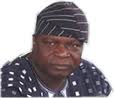
Jonah Jang- the Governor in a state in crises-


Jonah Jang
Jonah Jang, retired air force officer, administrator and governor of Plateau State, 66, March 13. Born in Du near Jos, Plateau State, he was educated at Riyom Primary School, Du-Jos, 1953-1956; Riyom Senior Primary School, 1957-1959; Plateau Provincial Secondary School, Kuru, 1960-1964; Air Force Supply Operations Course, USA,1972; Junior Command and Staff School 1975; Command and Staff College, Jaji, 1978-1979. Jang was commissioned as regular combatant officer, 1969. He was appointed military governor of Benue, 1985-1986; military governor of Gongola, (now Adamawa State) 1986-1988; director of logistics, Nigeria Air Force, NAF headquarters, Lagos, 1988. He was elected governor of Plateau State, 2007

Jonathan Slams Ethnic Bigots


From Thisday;s Sufuyan Ojeifo in Abuja, 06.25.2010

In what may be a veiled swipe at proponents of zoning, Pres-ident Goodluck Jonathan yesterday said those who could not compete favourably for positions were the ones playing up all manner of sentiments for selfish motives.

“We are a country where our leaders tend to play tribal sentiments, saying I am from the South-South; I am from North-west; I am North, I am South, I am a Muslim and I am a Christian.

“All these are selfish motives to make people who probably cannot compete with others…to use these sentiments,” Jonathan said in his address to the Nigerian community and friends of Nigeria at the Marriot Easton Centre in Downtown, Toronto, Canada.
The video of the address was sourced by THISDAY, courtesy of the Nigerian Abroad News Magazine.

Proponents of zoning including the 150 Northern Leaders who met last week in Abuja have been insisting that power should return to the North in 2011 based on the zoning formula of the Peoples Democratic Party (PDP), under which they claimed power had been ceded to the region till 2015.

Among those who attended the meeting were former military President, General Ibrahim Babangida, former Vice-President Atiku Abubakar, former Finance Minister Adamu Ciroma and former Senate President Iyorchia Ayu.
But only two days ago, former Head of State, General Muhammadu Buhari, said in a statement that Nigerians should be allowed to make their choice of president freely in 2011 and that zoning is a PDP affair and should not be misconstrued as a position of the entire North.

Jonathan’s meeting with the Nigerian Community came ahead of his attendance of the G-8 Outreach Programme for Heads of States who were invited to the G-8 Summit holding at the Deerhurst Resort, Muskoka, Ontario, Canada.
The President assured Nigerians in the Diaspora that his administration would conduct credible elections next year and that votes of Nigerians at home would indeed count.

He said that the process must begin from within the parties, stressing that “we must present the best candidate as there is no room for manipulation because if you try that, you will lose out at the general elections because there will be no compromise in any way.”

He assured Nigerians that his administration “will begin to sanitize the society because one thing is that how people get into office matters so much and the character of people that come to be governors, presidents and parliamentarians matter so much.”
He warned that if the wrong method was used to get into office, the country would be doomed, stressing “the only way we can sanitize that is to make sure that electoral processes are the ones that can bring out persons that people want and the votes of people must count.”

He lamented that Nigeria was yet to develop to the level where Nigerians in the Diaspora could vote in their countries of domicile, but promised that immediately the country sanitized the electoral process for the 2011 elections, voting by Nigerians in the Diaspora would be the next agenda for the 2015 elections.

According to him, “Immediately we sanitize what is going on at home, we will, at least, come up with a method where Nigerians can go to the embassies and vote.

“For the 2011 elections, it will not be possible. We will sanitize the electoral process but before 2015 polls, the conviction is that Nigerians should be able to vote outside Nigeria .”
Jonathan told the gathering that Nigeria has now stabilized politically; pointing out that the next thing to achieve “is to jump-start technological development.”

He said: “That is why one of the things we are trying to do is to upgrade the department in the Foreign Ministry that deals with Diaspora issues to a full-fledged commission so that we will be able to liaise properly with the Diaspora population, harnessing their talents.”

He said the Nigerian professionals in the Diaspora were the people who would come and jump-start the process of technological development, even as he expressed hope that Nigeria should be able to play a big role in the year 2020.

But he said that would not be possible without first building the power infrastructure that would provide electricity round the clock.
Meanwhile, President Jonathan has told participants at the G20 Business Leaders Conference that private sector and international investment is needed in Nigeria’s energy, banking and agricultural sectors.

He also used the opportunity of attending the back-to-back G8 and G20 summits brief the members on a raft of reform initiatives in energy and banking sectors aimed at making the private sector the major economic drivers, AFP reported.

"What is required is massive investment by the private sector within Nigeria and internationally," said Jonathan, who is visiting North America for the first time in his less than two months in office, told the business leaders from North Africa, Europe and Asia.
"This is not the time to sit back and await further development because you may lose the opportunity of being a pioneer investor," Jonathan said.

On his arrival Wednesday, Jonathan said he would seize the opportunity to "share with the G8 leaders his vision and plans for the consolidation of democracy and the revitalization of the Nigerian economy."

The G20 talks will focus more on shoring up recovery as the world economy emerges from its worst crisis in decades.
"Today, we are faced with challenges that are equally serious and we will need such bold and friendly partners who will stand with the people of Nigeria in our determined effort to bring happiness to our people," Jonathan said at yesterday’s session.

However, a statement by the Office of the Special Adviser to the President on Media and Publicity, Ima Niboro, said the President’s meeting with the Nigerian community in Canada witnessed an unprecedented gathering of Nigerian professionals in that country.
The statement said that Jonathan, accompanied by Governor Danbaba Suntai of Taraba State, and his Osun State counterpart, Prince Olagunsoye Oyinlola, arrived at the Infield Terminal of Lester Pearson International Airport, Toronto at 6.00p.m (local time) (10.45p.m Nigerian time).

The 32-man delegation was received on arrival by Minister of State, Foreign Affairs of Canada, Mr. Peter Kent alongside the Foreign Affairs Minister, Mr. Odein Ajumogobia, and the Nigerian High Commissioner to Canada, Prof. Iyowuese Hagher.
The statement said that Jonathan was expected later yesterday to hold working dinners with Presidents Eduardo-Dos-Santos of Angola and Jacob Zuma of South Africa.

The trio would hold a tripartite-meeting that would help promote the mutual and bi-lateral relations between and among the three countries.
According to the statement, “He (president) will on Friday 25th June (today) attend a combined outreach programme with the G-8 leaders.

“The President will on arrival at the venue be welcomed by the Canadian Prime Minister Stephen Harper. He will thereafter proceed to meet with other invited leaders and proceed to meet with the G-8 leaders for the outreach programme.
“The meeting will end with the traditional family photos usually taken by the G-8 leaders and the invited Heads of State.”
The statement said the President would return to Abuja tomorrow.

The Man - Chief Olabode George swimming in murking waters of Nigeria politics


Olabode Ibiyinka George was born on November 21, 1945 in Lagos. He earned a B.Sc and MBA. Bode George became a Commodore in the Nigerian navy, and was appointed Military Governor of Ondo State (1988-1990). The African Concorde magazine reported that George treated the state budget as his own, spending lavishly and handing out inflated contracts in return for large kick-backs. In a July 2002 interview, Lagos State Governor Bola Tinubu said Bode George needed to face a criminal tribunal over his activity in Ondo state. He said "Bode George and his fellow travellers who believe in military arbitrariness have to be told in clear terms that their time has passed, we are under democracy now." In response the PDP party Chairman, Alhaji Muhammed Muritala Ashorobi, said Bode George had an outstanding record as governor of old Ondo State, and the structures he built were key monuments. He established the Rufus Giwa Polytechnic, Owo by edict in 1990, a school that now has over 4,000 students. While governor, he was attacked at a ceremony in the University of Lagos (UNILAG), of which he is an alumnus.
He became Principal Staff Officer, to General Oladipo Diya when the latter was Chief of General Staff, between 1993 and 1997. George was also a Director at the Nigerian National War College (NWC).
Bode George was appointed Chairman of the Nigerian Ports Authority in 1999. In February 2001, while visiting the Delta ports, Bode George called for increased security, and also discussed the problem of delays in payment of large sums of money owed to the port authority by organizations such as the Petroleum Products Marketing Company, Nigerian National Shipping Line, Delta Steel Company and Central Water Transport Company. In April 2001, George said that one of the causes of port congestion that importers were slow to clear their goods because of fear of seizure. In May 2001, Bode George called for construction of new dry ports and warehouses to tackle congestion. In September 2001, Chief Bode George directed that all empty containers should be moved out of the Lagos seaports to free up space. In July 2002, he appealed to Truck Owners striking over clearance of goods at the Lagos ports to go back to work.[
In March 2003, Bode George commended the Grimaldi Group for investing in Nigeria, and said the NPA would solve the shortage of berths for ships at the RORO port by expansion when the present government gained power in April. In August 2003, talking of plans to privatize port operations, Bode George said "The illusion that the NPA is a buoyant and bottomless source of funds, which has encouraged a culture of carefreeness in the handling of contracts and materials, the unwarranted external influences to procure materials and equipment that are not required for our operations needs, lack of proper stock taking and modern store management procedures, the poor maintenance and management of our assets, all these must give way to harsh realities of our new role.
In October 2003, the senior management and the board of the Nigerian Ports Authority was dismissed. The new managing drector, Chief Adebayo Sarumi, hired auditors to review major existing contracts. Their review found irregularities. It was passed to the Economic and Financial Crimes Commission under Nuhu Ribadu, which started investigations in 2005.
Bode George was close to president Olusegun Obasanjo, and was given preference in the sale of houses in Lagos state. In 2001, George was made the PDP's national vice-chairman in the southwest zone. Later he became PDP Deputy National Chairman, South, and then the National Deputy Chairman of the PDP.
At a March 2001 rally, George appeared to back Chief Funsho Williams, the runner-up in 1998 Lagos State governorship primaries of the Alliance for Democracy (AD) party, as the PDP candidate for the 2003 governorship election. Williams later decamped to the PDP.
In February 2002, in response to allegations that the PDP was imposing levies on prospective aspirants for political offices, Bode George said the party had never given such a directive, and anyone caught doing do would be arrested and handed over to the Police. In August 2002, Nick Mbaezue, the leader of Anambra People's Forum (APF) arm of the Anambra State chapter of People's Democratic Party (PDP) accused Bode George of auctioning the PDP executive to the governor's faction.
In January 2003, Chief Olorunfunmi Bashorun, the founding chairman of the Peoples Democratic Party in Lagos State, and other leaders, petitioned the National Chairman over a crisis in the party. They accused George and his client Alhaji Murtala Ashorobi of favoritism. In April 2004, George denied any involvement in the reported detention of Governor Bola Tinubu of Lagos State and two other former governors. The three were attending a funeral in Iyin-Ekiti when they were detained by soldiers and policemen.
In June 2004, a splinter group of the PDP accused Bode George, south-west chairman of the party, Senator Adeseye Ogunlewe, and Mohammed Ashorobi, the PDP state chairman of breaking up the party through of intimidation, blackmail, discrimination and abuse of power. In July 2004, there was a crisis in Anambra State where the house of assembly first stated that the governor Chris Ngige had resigned and the deputy governor, Okey Udeh should take his place, then reversed their decision saying they had been deliberately misled. Bode George headed a PDP panel that recommended that Okey Udeh resign.
In January 2005, This Day reported that Bode George was expected to be named National Chairman of the PDP at the party's national convention in November. In July 2005, he was promoted to PDP Deputy National Chairman (South). In February 2007, Olabode George called for the resignation of Vice President Atiku Abubakar, who had defected to the Action Congress (AC) party. In March 2008, the PDP National Chairman, Prince Vincent Ogbulafor dismissed Bode George from the Governing Board of the Peoples Democratic Institute (PDI).[34] In April 2008, the PDP National Disciplinary Committee (NDC), which Bode George headed, was dismantled

The Man - Prince Olagunsoye Oyinlola,


Prince Olagunsoye Oyinlola, fondly called “Lagun” within the family circle was born on Saturday, February 3, 1951 in Okuku, Odo Otin Local Government Area of Osun State into the royal Oyinlola family. His father, Late Oba Moses Oyewole Oyinlola was the Olukuku of Okuku between 1934 and 1960 and has a record of a peaceful and successful reign. Olagunsoye’s mother, Late Olori Comfort Ololade Oyinlola, hailed from Otan Ayegbaju. Her family migrated from Otan-Ayegbaju to settle in Okuku. Olagunsoye Oyinlola’s mother died in 1959 when he was barely eight years old while his father died a year later. Following the loss of both, at a very tender age, the task of nurturing Olagunsoye fell on the elderly members of his family.
The formative stages of his educational career saw Olagunsoye attending four primary schools between 1958 and 1963 due to the fact that his guardians who took over his parental responsibilities were not stable. He, however, completed his primary education at St. Michael’s Primary School, Okuku in 1963.
Thereafter, he proceeded to Odo-Otin Grammar School, Okuku, from where he obtained the West African School Certificate in 1968. Olagunsoye Oyinlola, out of love for the military profession, enlisted in the Nigerian Army in 1969 as a private Soldier and was posted to the Signals Corps, then headed by Late General Murtala Ramat Mohammed. He rejected an admission offer into the Ahmadu-Bello University, Zaria, as a result of his love for the uniform. He later attended the Nigerian Defence Academy as a participant in the Short Service Course 11 and was commissioned as an officer in 1971, into the Armoured Corps of the Nigerian Army at the prime age of 20.
In quest of knowledge, Olagunsoye Oyinlola attended the Obafemi Awolowo University, Ile-Ife from where he bagged a Diploma in International Relations in 1979. He later proceeded to the University of Madras, India, where he graduated with M. Sc. Degree in Defence Studies in 1988.
Olagunsoye, in consideration of the fact that knowledge is power, also attended the University of Ibadan where he added the Masters Degree in Strategic studies to his academic achievements in 1999. Not yet satisfied with his academic attainments, Oyinlola again proceeded to Buckingham University, United Kingdom where he graduated in law in 2003. His decision to study Law was influenced by his desire to provide free legal services to the poor.
Prince Olagunsoye had a fulfilling career in the military. Prince Oyinlola trained at the Nigerian Defence Academy, Command and Staff College Jaji, where he also served as a Directing Staff, and Military Institutions in India and the United-States.
Prince Oyinlola was at the National War College, Abuja where he was awarded the Fellowship of the War College in 1998. He served meritoriously in various capacities as Troop Leader, Squadron Leader, Battalion Commander, Brigade Commander, Acting General Officer Commanding and Military Administrator.
He participated in the United Nations Peace-Keeping exercises in Chad in 1983 and Somalia in 1993. The stream of successes recorded by Olagunsoye Oyinlola in the military and his humility and level headedness, saw him being appointed the military administrator of Lagos State, a position he held from December, 1993 till August 1996. He bowed out of Military Service as a Brigadier-General in 1999.

MILITARY INSTITUTIONS ATTENDED AND QUALIFICATIONS OBTAINED
1. Nigerian Army School of Education – Ilorin 1973 – French, English/Current Affairs Course.
2. 5e Regiment de Chasseurs, Periguex France 1974 Specialities on AML 60 and 90.
3. NAAC School Ibadan 1974 – Young Officers Course.
4. Royal Armoured Corps Centre, Britain 1975 – Troop Leaders Armoured Course.
5. The School of Armour Pakistan 1977 – Communications Instructors Course.
6. Command and Staff College Jaji 1979 – Junior Division Staff Course.
7. US Army Armour School, USA 1981 – Armoured Officer Advanced Course.
8. Command and Staff College, Jaji 1982/83 – CSC course 5.
9. US Army Institute of Personnel and Resource Management USA 1984 Adjutant General Officer Advanced Course.
10. US Army Institute of Personnel and Resource Management, USA 1984 Military Personnel Officer Course.
11. Defence Services Staff College,walkington,India,1987/88 Comparative staff college
12. National War College, Abuja 1997/98 – NWC Course 6
A humane, compassionate and accommodating personality, Prince Oyinlola married his wife, Omolola, (nee Majekodunmi) in 1978. The union is blessed with four children. His hobbies include golfing, hunting and fishing. Olagunsoye Oyinlola emerged the Governor of Osun State by winning the gubernatorial polls of April 19, 2003 on the ticket of the Peoples Democratic Party.
Since assumption of office as Governor of Osun State, on May 29, 2003, Prince Oyinlola has embarked on several welfare schemes and developmental programmes designed to improve the living standard of the populace. The programmes of his administration accorded immediate priority attention include Water Resources, Transportation, Agriculture, Health, Education, Security Poverty Alleviation and Job Creation.
Prince Olagunsoye Oyinlola has handled the intricate art of governance with the greatest zeal, commitment and dedication. The various streaks of successes being recorded by the current Administration in Osun State are due largely to team-work and the ability of the Governor to carry everybody along in the scheme of things. Olagunsoye Oyinlola, a gifted and talented manager of human and material resources is imbued with immeasurable native wisdom. He has fallen back on this attribute in the handling of State matters to the admiration of the citizenry. Olagunsoye Oyinlola is gradually transforming Osun – State, which he inherited as a theatre of conflicts and irreconcilable differences into a modern and peaceful state which is in a hurry to develop. Governor Oyinlola has been able to steer the ship of the State to the total admiration of all, convincingly exhibiting a responsive and responsible leadership style that has stood him out as an achiever and selfless patriot.
This, not being his first outing in this kind of assignment, Prince Olagunsoye Oyinlola has thrown himself headlong into the service of his people and by implication the Nigerian State. Several people – friendly policies, including “Operation-Sweep” were introduced by Olagunsoye Oyinlola during his tenure as Military Administrator of Lagos State. A good manager of human-resources, Oyinlola pays particular attention to the welfare of the working class and the general populace.
The programme of the Government of Osun State, which he heads as Governor has been mapped out to accord the development of “man and his environment” the major focus. Oyinlola believes strongly in the principle of management by objective and has therefore consistently managed the human and material resources in Osun State in line with laid down objectives of Government. The current Administration, headed by Prince Olagunsoye Oyinlola has utilized to the greater advantage of the citizenry the principle of visioning and planning. His wide acceptability has resulted in his emergence as the Leader of the Peoples Democratic Party in Osun State.
A believer in the doctrine of justice and fairplay, Oyinlola has continue to review anti-people policies inherited by his Administration. Issues are treated without discrimination and without ill-will or affection, not minding whose ox is gored. Prince Olagunsoye Oyinlola’s posture is that of ensuring the running of a responsible and responsive Government.

The Man - Lt. Gen Theophilus Yakubu Danjuma Rtd


Lt. Gen Theophilus Yakubu Danjuma Rtd was born on the 9 December 1937 in Takum Local Government Area of Taraba State, Nigeria. He completed his primary education at the St. Bartholomew’s Primary School, a Christian Missionary School in Wussa town in Zaria, Kaduna State.
His Secondary education was at the Benue Provincial Secondary School in Katsina-Ala, Benue State where he graduated in 1958 after which he proceeded to the Nigerian College of Arts, Science and Technology (now Ahmadu Bello University), Zaria, Kaduna State. Although he desired to be a historian, the disciplined life of the armed forces was of great attraction to him and in the year 1960, he enrolled into the Nigerian Military Training College in Kaduna.
Between 1960 and 1961, he attended Mons Officer Cadet School, Aldershot, United Kingdom. He was also a student of the School of Infantry, Hythe and Warminster (1962), Special Warfare Centre (1963) as well as the Army Staff College in the United Kingdom in 1967.
General Danjuma served in the following positions in the Nigerian Army;
• Brigade Commander
• Deputy Division Commander
• Chairman of the Special Military Tribunal to Trinidad and Tobago
• General Officer Commanding 3rd Infantry Division of the Nigerian Army
• Chief of Army Staff
• Chairman of the Joint Chiefs of Staff
Following a successful military career, the General also served in key political positions, which include;
• Chairman of the Presidential policy Advisory Committee in 1999
• The Honourable Minister of Defence (1999-2003)
• Chairman of the Presidential Advisory Council (2010-Date)
As a successful businessman, General Dajuma has founded the following companies;
• Nigeria America Lines Ltd
• T Y Holdingss Ltd
• South Atlantic Petroleum
• Union Dicon Salt Plc
• Best Land and Sea Ltd
• Galba Ltd
• T Y Chemicals Ltd
• Unitrust Insurance
• T Y Acres
• Comet Shipping and a host of others.
General T Y Danjuma is also a philanthropist. He has an impressive track record of philanthropic giving, which culminated in the establishment of the T Y Danjuma Foundation. The foundation seeks to support innovative and catalytic initiatives that will improve the socio-economic well being of people in poor resource settings in Nigeria and further leverage the investments of others in these efforts at national and international levels.
General Danjuma is happily married and blessed with children.

The Man - Alhaji Umaru Yar'Adua, Nigeria’s 13th President


Alhaji Umaru Yar'Adua was president of Nigeria from 2007, breaking the cycle of civilian rule and military coup which had dogged the country since independence. Yar'Adua was somewhat reclusive in his dealings with the public and press, and his only major political success was dealing with the civil unrest in the oil-rich Niger Delta -- convincing many to give up their arms during a three-month amnesty in 2009.
Date of Birth: 16 August 1951. Katsina, Nigeria
Date of Death: 5 May 2010, Abuja, Nigeria
An Early Life
Umaru Yar'Adua was born to elite Fulani family in Katsina, northern Nigeria -- one of Nigeria's the leading centers of Islamic study. Yar'Adua's father was prominent in both traditional and national politics -- he was the Mutawalli, the custodian of the royal Katsina treasury, and the federal minister for Lagos during the First Republic (1963-66). Yar'Adua's elder brother, Shehu Musa Yar'Adua, was an army general and served as deputy leader to Olusegun Obasanjo's military government of 1976-79.
Umaru Yar'Adua attended schools in central and northern Nigeria -- particularly the government college in Keffi from 1965 to 69, and Barewa College in Kaduna (considered to be the most prestigious school in northern Nigeria) until 1971. Yar'Adua attended Ahmadu Bello University in Zaria, Northern Nigeria, between 1972 and 75, where he obtained a BSc in Chemistry. (He went on to gain a masters degree from Ahmadu Bello in 1978.) Whilst at university, he developed a strong interest in Marxism (causing some tension in the family since his brother had Capitalist tendencies). In 1975 he married his first wife Turai.
Between 1975 to 1983 Yar'Adua taught as a chemistry teacher at various colleges and schools in northern Nigeria before becoming a business man: working as a manager (initially for Sambo Farms Ltd in Katsina) and director in several companies, including banks and investment houses.
Starting Out in Politics
Umaru Yar'Adua began his life in politics with the People's Redemption Party, PRP, during Nigeria's Second Republic (1979-83). The country had emerged from Olusegun Obasanjo's military government under the leadership of President Shehy Shagari (National Party of Nigeria). Shagari's rule was largely ineffectual, with widespread corruption. After winning a second term through a questionable election, Shagari was overthrown by Muhammadu Buhari in a military coup in December 1983.
A second military coup followed in 1985, when chief-of-army staff Ibrahim Babangida removed Buhari. Nigerian politics entered a transitional stage, from 1989 to 93, as Babangida began the transfer of government to civilian rule. During this period Umaru Yar'Adua became a founding member of the People's Front, PF, along with his brother Shehu Musa who became the party's leader. Umaru Yar'Adua started looking towards state politics and stood as a candidate for the Katsina gubernatorial (ie state) election. He lost to an ally of Babangida. In 1992 Umaru Yar'Adua married his second wife, Hajiya Hauwa. They were divorced five years later.
Having discovered he enjoyed being in power, Chairman of the Armed Forces Ruling Council Ibrahim Babangida did his best to stymie the transition of power -- annulling the presidential election of 12 June 1993 which he had lost. He was forced to hand over government to an Interim National Council, under Ernest Shonekan in August 1993. Only three months later, another military coup put General Sani Abacha in power. Umaru Yar'Adua and his brother were imprisoned in 1995 (along with Olusegun Obasanjo) during the middle of Sani Abacha's period of military rule (1993 to 98) -- they were accused of plotting a coup. Shehu Musa Yar'Adua died in prison in 1997.
As A State Governor
Olusegun Obasanjo along with Umaru and Shehu Yar'Adua were founding members of the People's Democratic Party, PDP, which became the most 'national' of Nigeria's political groups as Abacha's rule came to an end -- he died from an apparent hert attack on 8 June 1998. He was succeeded by General Abdulsalami Abubakar, who released many of Abacha's political prisoners. New elections for state assemblies, governorships, the National Assembly and the presidency were held through 1999. Umaru Yar'Adua once again ran for governor in Katsina state, under the mandate of the PDP. He won (and was re-elected in 2003). Olusegun Obasanjo was elected president in May 1999, creating Nigeria's Fourth Republic.
As state governor Yar'Adua is credited with a focus on socio-economic development, especially within education and health. He was also, however, accused of nepotism -- several key contracts were given to companies linked to his family's business empire. Charges of corruption, a common thread to Nigeria's post independence history, were not uncommon and Yar'Adua had attempted to preempt these by publicly revealing his assets before the election took place. Katsina state had significant debts, inherited from his predecessors' terms as governor. But Yar'Adua was a prudent state official, and over the next two terms turned the deficit into a $50 million surplus. In 2000 Katsina became the fifth Nigerian state to adopt Sharia Law.
Yar'Adua for President
Yar'Adua was selected by Olusegun Obasanjo as the People's Democratic Party's (PDP) candidate in presidential elections for 2007 -- Obasanjo had served his two terms and could not run again. It was rumored at the time that Obasanjo used both political inducements and the threat of investigation by the state's anti-graft agency to bring the other state governors in line with his choice (rather than run themselves). It is also possible that Obasanjo considered Yar'Adua to be suitable puppet through which he could maintain power -- but in the end Yar'Adua didn't play along.
Yar'Adua ran against several popular military and political leaders, but won a landslide of 70% of the vote in April 2007. The victory, however, was clouded with accusations of vote rigging, voter intimidation, and violence. The election was criticized both nationally, and international observers. On 29 May 2007 Umaru Yar'Adua was inaugurated as Nigeria's 13th president -- this was the first time an elected president was succeeded by an new elected president (ie not a military take over), and Yar'Adua was the first Nigerian president to have a university education. Nigeria had high expectations for its 'new' regime.
Obasanjo had initiated several development programs, and Yar'Adua faced the enormous task of continuing them -- reestablishing peace and instituting reconciliation in the oil-rich Niger Delta, combating corruption (Yar'Adua once again declared his assets as part of the process, and was the first Nigerian president to do so). He also announced that he would improve the electrical power sector in Nigeria, and deal with the flawed electoral system (several state governor elections were, as a result, overturned).
Proving himself to be independent of Obasanjo, Yar'Adua reversed some of Obasanjo's policies, particularly the privatization of state companies. He also dropped key Obasanjo allies in the PDP (such as the head of the anti-corruption agency, Nuhu Ribadu, and the central bank governor, Chikwuma Soludo). Goodluck Jonathan, the governor of Bayelsa State, was selected to be vice-president.
Although Yar'Adua had a reputation for fair play, and being somewhat reclusive in his dealings with the public (and especially the media), he was also known to be a demanding leader who permitted little opposition in his party. Like Obasanjo, he used the threat of anti-corruption investigations to keep people in line. But he was slow to develop policy, and was given the nickname 'Baba-go-slow'.
Declining Health
Rumors of ill health soon surfaced, and he traveled abroad for medical treatment on several occasions (as it was revealed he had before the presidency). After visiting Jeddah, Saudi Arabia, in November 2009 for heart and kidney problems, his critics in government called for power to be transferred to vice-president Goodwill Jonathan. They were worried by the increasing power vacuum caused by his absence. In interviews Yar'Adua refused to comment about his health, other than to say he was "in the hands of God."
A Nigerian court ruled, on 29 January 2010, that Yar'Adua was not obliged to transfer power, but his absence from the country became more pressing. On 9 February 2010 the Nigerian National Assembly voted to have Goodwill Jonathan assume full power (despite constitutional questions about his authority to do so) and take over as acting president. Although Yar'Adua returned to Nigeria on 24 February 2010, Jonathan continued in his role as acting president.
Umaru Yar'Adua died on 5 May 2010 at the presidential villa, Aso Rock, in Ajuba, and was buried in Katsina the following day according to Islamic tradition. Acting president Goodluck Jonathan was sworn in as president on 6 May 2010 to serve out the remaining presidential term. Yar'Adua was survived by his wives and nine children (having had two sons and five daughters with his first wife Tauria, and two sons with his second wife Hajiya Hauwa).